
David Perlleshi leads Franklin Street’s self-storage investment sales line. Over the last five years, the team has completed 200+ transactions across 30+ states and is scaling a high-volume brokerage model focused on consistent deal flow and market share.
David Perlleshi leads Franklin Street’s self-storage investment sales line. Over the last five years, the team has completed 200+ transactions across 30+ states and is scaling a high-volume brokerage model focused on consistent deal flow and market share growth. In 2024, the team brought 57 listings to market; in 2025, 65; and the target for 2026 is approximately 90 listings.
Franklin Street’s self-storage team runs a high-velocity brokerage engine. That operating model depends on one thing above all: getting to market fast. But the traditional offering memorandum (OM) workflow created a persistent bottleneck.
Prior to Henry, OMs were built largely from scratch by a marketing/graphics resource. Producing a single OM typically required about a week of focused effort. In practice, that capped output at roughly 4–5 OMs per month at full capacity.
The lag wasn’t just inconvenient—it directly reduced broker velocity. When brokers are waiting for packaging, they are not doing the work that drives revenue: client-facing outreach, buyer engagement, and deal execution. Perlleshi noted, “If you’re waiting on the sidelines and you’re waiting to bring a deal to market… you’re losing velocity, you’re losing the ability to close deals quicker.”
In brokerage, time-to-market compounds. A two-week delay at the front of the process ripples through the entire transaction timeline—outreach starts later, tours happen later, LOIs arrive later, and PSA timelines shift.
Even when downstream steps still take time (LOIs, contract negotiations, closing logistics), compressing the early phase creates immediate leverage: brokers can keep deals moving while simultaneously originating the next ones.
Franklin Street implemented Henry to modernize and standardize OM production. Instead of relying on manual layout work, the team inputs deal information, underwriting models, market data, and photography into Henry to generate a professional, client-ready OM.
The result: OM creation became a repeatable, broker-led process—without sacrificing presentation quality. “Now we just input information to Henry AI and we’re able to produce a professional, beautiful OM,’ shared Perlleshi
Henry materially improved Franklin Street’s speed to market. Prior to Henry, bringing a deal to market could take roughly two weeks end-to-end, with OM production acting as a primary constraint. With Henry, the team is typically able to go live in under a week, and once core inputs are assembled—photos, models, and deal data—they can produce a workable OM within 24 hours.
Henry also expanded the team’s capacity without requiring additional headcount dedicated to packaging. Previously, OM production limited output to roughly 4–5 OMs per month at full capacity. With Henry standardizing and simplifying the workflow, the team believes it can increase production volume by roughly four times (or more) because OM creation is no longer gated by a full-time design/marketing resource.
Finally, Henry enabled Franklin Street to reallocate internal resources toward work that more directly supports revenue and execution. A role that had primarily focused on design and marketing coordination could be repurposed into a transaction coordinator / client services manager function—strengthening client service and transaction throughput while allowing brokers to spend more time on client-facing selling activity.
Franklin Street’s self-storage investment sales team is building one of the most active, high-volume brokerage platforms in the sector. Henry removed a critical operational constraint—OM production—by turning a week-long packaging task into a standardized workflow capable of generating a workable OM in 24 hours once inputs are ready.
The impact is direct and measurable: faster go-to-market, materially expanded capacity, and more broker time spent on client-facing work that drives transactions and revenue.
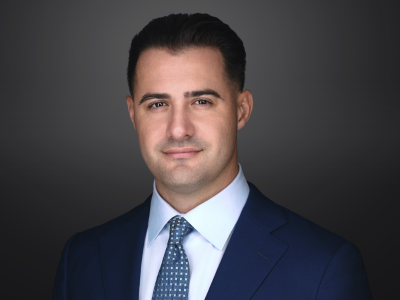
“It used to take us probably about two weeks to hit the market. Now it’s under a week… Once we input photos, models, and data into Henry, within 24 hours we’re able to produce a workable OM.”